
Review by Chris Heide
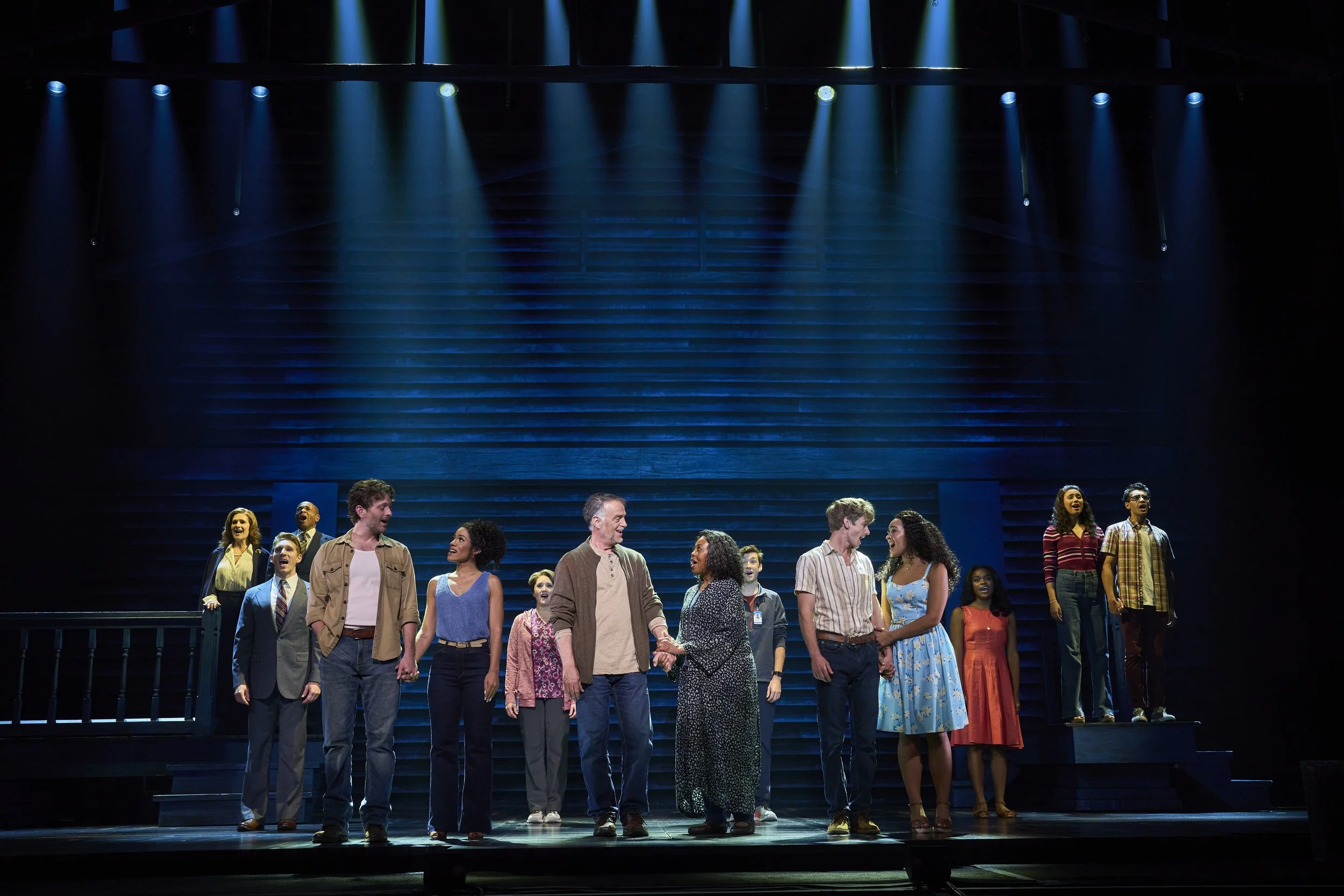
Photo by Roger Mastroianni
Some stories arrive on stage with an audience already carrying a set of expectations. The Notebook is one of them. The 2004 film adaptation of Nicholas Sparks’ novel has become synonymous with sweeping romance and emotional devastation. Many people remember the film not just for its love story, but for the quiet melancholy that lingers beneath it. The Broadway touring production, now playing in Seattle, approaches the same material with a slightly different lens. While the emotional weight of the story remains intact, the musical feels more hopeful than the film. It leans into romance rather than dwelling in the sadness that often defined the movie.
The show tells the familiar story of Noah and Allie, whose relationship unfolds across decades. Like the film, the narrative begins with an older Noah reading from a notebook to Allie as she struggles with memory loss. From there the story moves through the moments that defined their relationship, beginning with their youthful summer romance and eventually arriving at the complicated middle years of their lives together.
One of the musical’s most effective choices is the decision to portray Noah and Allie at three stages of life simultaneously. Kyle Mangold, Ken Wulf Clark, and Beau Gravitte portray Noah as a young man, a middle-aged husband, and an elderly partner reflecting on a lifetime of love. Chloë Cheers, Alysha Deslorieux, and Sharon Catherine Brown do the same for Allie. Instead of isolating these timelines, the production frequently places all three versions of the characters on stage together.
This approach allows the story to move fluidly through time. The younger, middle-aged, and older Noahs and Allies sometimes sing together, sometimes mirror each other’s movements, and occasionally appear to interact across decades. The effect feels almost dreamlike, as though the characters are moving through memories rather than simply revisiting them.
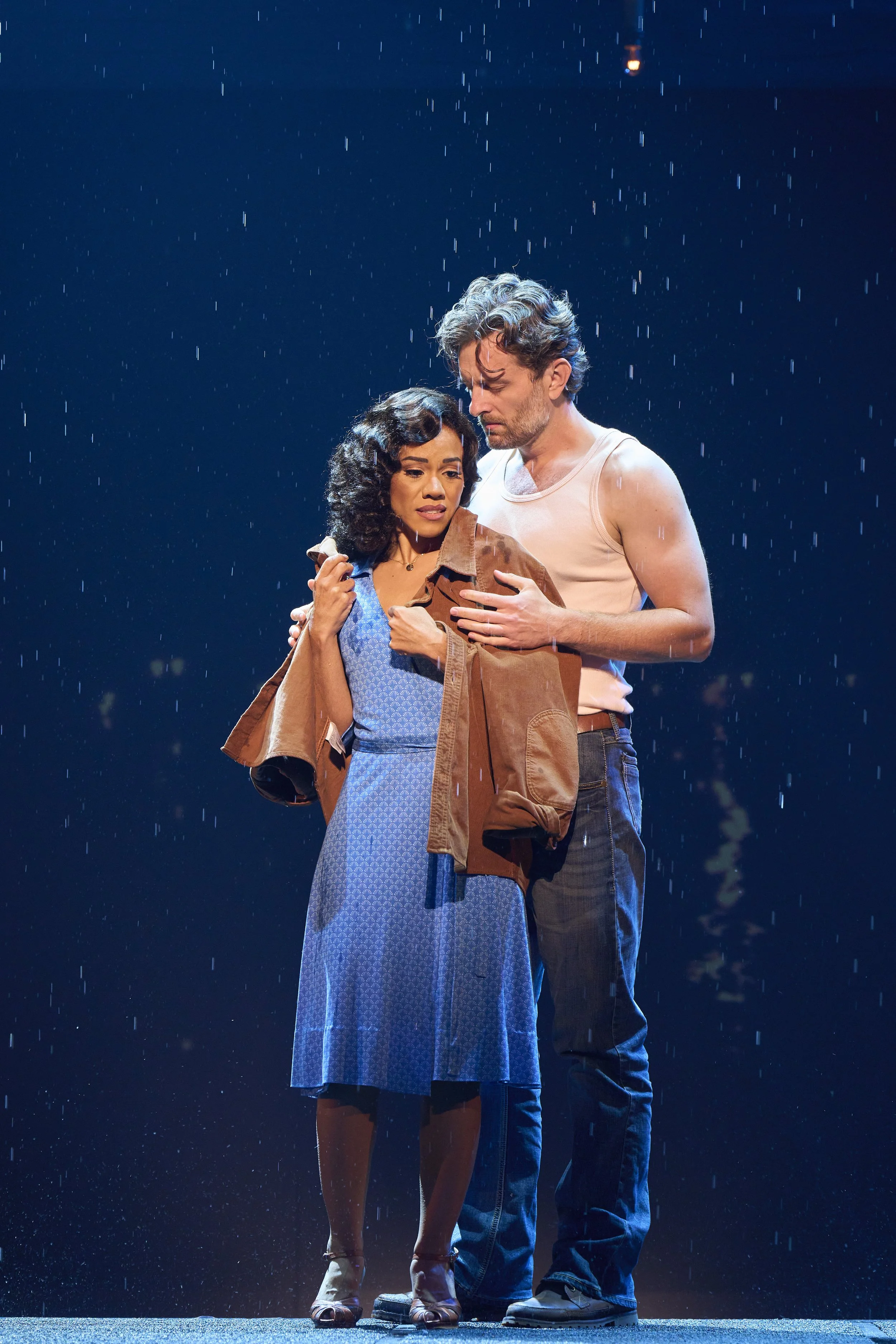
Photo by Roger Mastroianni
That structure also allows the production to recreate several of the moments audiences associate most strongly with the film. Noah and Allie’s famous argument in the rain appears here as well, and it remains one of the most memorable scenes in the show. The staging captures the emotional volatility of the moment while still grounding it in the tenderness that defines their relationship.
The musical’s score, written by Ingrid Michaelson, often favors intimate storytelling over spectacle. Many of the songs feel conversational, moving the narrative forward rather than stopping it for dramatic effect. Still, the show’s most widely recognized number arrives near the end of the evening. “My Days,” the musical’s 11 o’clock number that recently went viral on TikTok, has quickly become the defining song of the production. It is a moment that gathers the emotional threads of the story and releases them all at once.
What makes The Notebook work as a musical is its sincerity. The production does not attempt to reinvent the story or distance itself from the film that made it famous. Instead, it embraces the familiar structure and focuses on the emotional connections between its characters. The staging is thoughtful, the casting is strong, and the decision to weave three versions of the same relationship together adds an unexpected layer of depth.
In the end, the musical becomes less about nostalgia for a well known movie and more about the enduring idea at the center of the story. Love does not exist in a single moment. It unfolds across years, across arguments and reconciliations, and sometimes across fading memories.
Seen through that lens, The Notebook becomes one of the more emotional shows currently on tour. It may tell a story audiences already know, but it still manages to remind us why that story has endured.
